
A Complete Coastal Guide by Car
Normandy is an ideal destination for a road trip. Its coastline is varied and dramatic, its towns charming and historic, and distances between highlights are manageable. Starting from Belgium, this region felt close to home yet offered enough diversity to feel like a real escape.
In this guide, I share the most beautiful stops along a Normandy road trip, practical travel information, accommodation tips and restaurants I personally enjoyed. The route follows the coast in a logical order, making it easy to adapt to your own travel plans.
How to Get to Normandy
Arriving by Car
If you’re traveling from Belgium, the Netherlands or northern France, driving is the easiest option. Normandy is well connected by highways, and once there, a car is essential to explore the coastline and smaller villages freely.
Arriving by Plane
Normandy is easy to reach, even if you’re flying in from abroad. One of the closest and most practical airports is Brussels Airport (BRU). From Brussels, it’s an easy three to four hour drive to the Normandy coast, making it a great starting point for a road trip.
For long haul flights, Paris Charles de Gaulle (CDG) and Paris Orly (ORY) offer the most international connections. From both airports, renting a car and driving to Normandy takes around two to four hours. Budget travelers can also consider Paris Beauvais (BVA), though it’s slightly further away.
Road Trip Route Overview
This road trip focuses mainly on Normandy, but it also includes a few stops just outside the official region that fit perfectly into the itinerary. Places like the Baie de Somme and Cap Blanc‑Nez and Cap Gris‑Nez are located in the neighbouring Hauts‑de‑France region, but they are often combined with Normandy in a road trip thanks to their proximity and similar coastal landscapes.

Starting the Coast: Cap Blanc-Nez and Cap Gris-Nez
Cap Blanc-Nez and Cap Gris-Nez, located near Calais, are an excellent place to begin a Normandy road trip. These white chalk cliffs overlooking the English Channel immediately give you that windswept coastal feeling Normandy is known for.
Well maintained walking paths allow you to explore the area easily, and on clear days you can even see England. It’s a strong first impression and sets the tone for the landscapes further along the route.

Boulogne-sur-Mer
Boulogne sur Mer is a pleasant coastal stop that combines a lively harbor with an impressive historic center. You can walk through the old upper town, stroll along the port or simply settle down for a relaxed meal near the sea. For food, we stopped at Restaurant Krêp for some great crêpes.
One place worth visiting here is the Basilica of Notre Dame de Boulogne, located in the old town. The basilica itself is striking, but the real highlight lies underneath. Beneath the church is the largest crypt in France, an extensive underground space with frescoes, Roman remains and religious art. It’s an unexpected and fascinating visit if you have a bit of extra time.


Baie de Somme
Baie de Somme is one of the most unique natural areas in northern France. Known for its wide tidal landscapes, dunes and wetlands, it feels open, calm and very different from the cliff dominated coastline further south. It’s a wonderful area for walking, photography and simply slowing down.
Many visitors come here hoping to see seals. Unfortunatelly, I didn’t spot any during my visit, but timing is crucial. The best chances are around low tide, especially at Pointe du Hourdel or Saint Valery sur Somme, ideally early in the morning or late in the afternoon.
Because tides play such a big role here, it’s important to check them in advance on sites like these. Always be mindful of the rising water, and consider guided walks if you want to explore the bay itself.

Falaises d’Ault and Mers-les-Bains
The Falaises d’Ault offer dramatic cliff scenery in a much quieter setting than Étretat. The views are impressive, and the atmosphere feels raw and less commercial, making it a great stop if you enjoy nature without crowds.
A short drive away, Mers-les-Bains adds a completely different feel. The town is known for its colorful Belle Époque houses with detailed façades and balconies. Walking through its streets and along the promenade feels relaxed and slightly nostalgic.


Dieppe
Dieppe is an ideal place to stop for the evening. The town has a lively harbor, a pebble beach and plenty of restaurants. Walking along the seafront at the end of the day is simple but very enjoyable.
We had dinner at Le Bas Fort Blanc, where I enjoyed fresh oysters followed by steak tartare. The food was excellent and surprisingly memorable.
Étretat and Honfleur
Étretat is one of Normandy’s most recognizable places, famous for its natural arches and chalk cliffs. Walking the coastal paths offers the best views and makes it easier to escape the busiest spots, even though it can get crowded. Unfortunately, we had awful weather so we were not able to do this.
Honfleur feels completely different. The picturesque harbor, narrow streets and lively terraces make it one of Normandy’s most charming towns. Weather makes a big difference here. My first visit was grey and rainy, which made me return later. On a sunny day, Honfleur really comes to life and invites you to wander without a plan.


Caen
Le Mémorial de Caen is one of the most important museums in Normandy and focuses on World War II, D Day and the search for peace. The visit is extensive, so it’s worth setting aside a few hours.
An adult ticket costs €20.80, while seniors and young people (10–18 years) pay €18.50. Children under 10 enter for free. If you want to go a bit deeper into the exhibitions, you can add an audio guide for around €3–4.50. Prices are valid for a full day and include access to all permanent exhibitions.
Mont-Saint-Michel
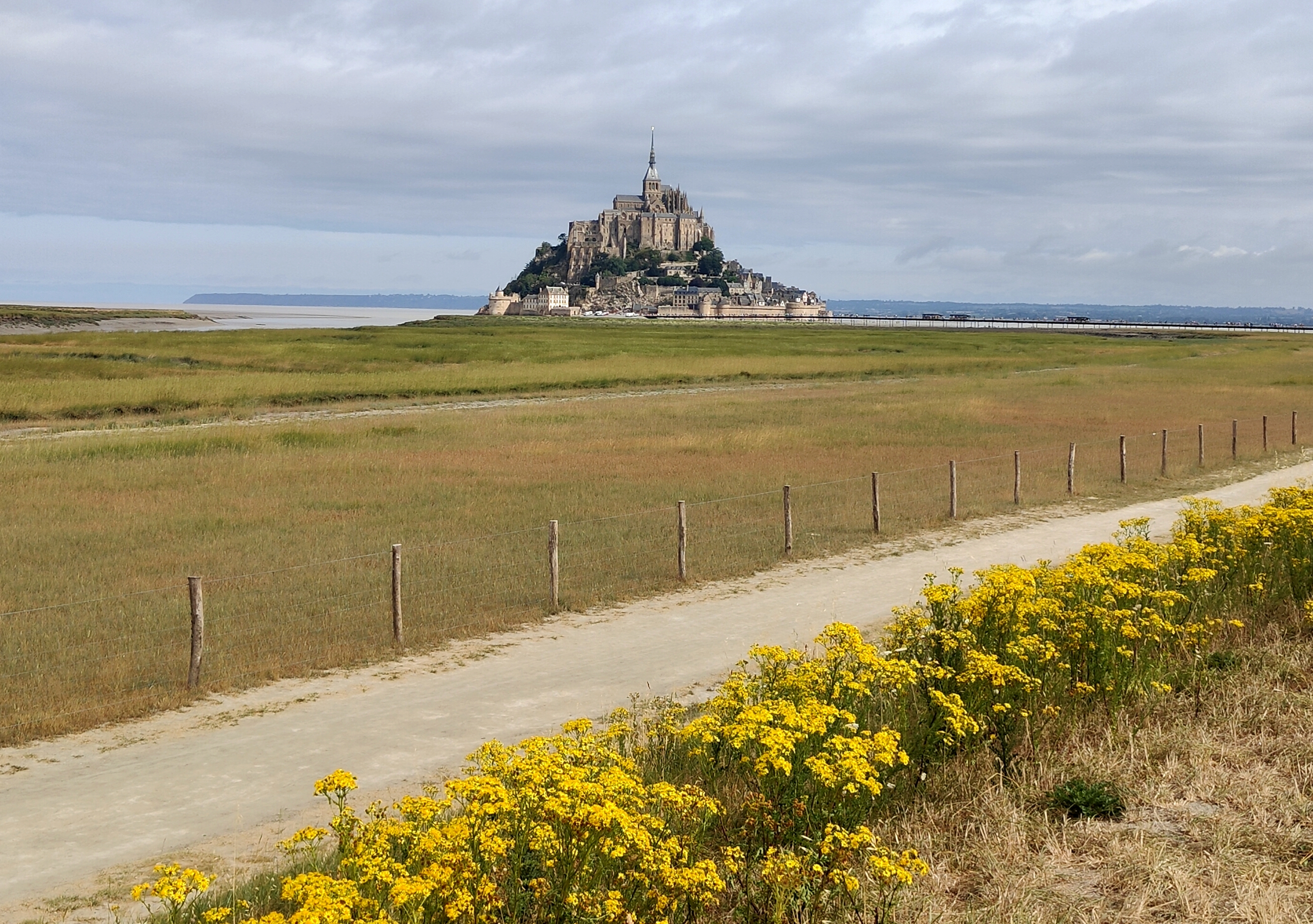
Mont-Saint-Michel is without a doubt one of the highlights of Normandy. Seeing the abbey rise dramatically from the landscape is unforgettable.
Cars are not allowed on the island itself. You have to park at the official parking area a few kilometers away and continue by free shuttle bus, bike or on foot. Prices depend on the season and parking duration. For a standard car, expect to pay around €16–22 for up to 24 hours in mid to high season. The first 30 minutes are always free, and parking is free in the evening between 18:30 and 03:00. Walking takes around 40 to 45 minutes and is highly recommended if the weather allows it. Checking the tide schedule beforehand is worth it, as high tide completely transforms the setting.
Walking through the village of Mont Saint Michel is completely free, but entry to the abbey itself requires a ticket. An adult ticket for the abbey costs €13 in low season and €16 in high season. Visitors under 18, and EU residents aged 18–25, can enter for free. You can buy tickets here.


Granville
Granville is a great stop if you feel like slowing down a bit during your road trip. You can walk along the promenade, spend some time on the beach or simply sit by the sea and enjoy doing nothing for a while. It is also the perfect spot to enjoy some fresh oysters.
It’s an ideal place to take a break between bigger highlights, especially if the weather is good. Granville doesn’t demand a checklist of sights, which is exactly what makes it such a pleasant stop.
Avranches
Avranches often gets overlooked, but it’s worth a short stop, especially if you’re coming from or heading to Mont Saint Michel. One of the main reasons to stop here is the view over the bay, which you’ll find at the Jardin des Plantes. This garden sits on a natural viewpoint above the town and offers a wide panorama over the Bay of Mont Saint Michel, with the Mont visible in the distance on clear days. It’s one of the best places in the area to really understand the scale of the bay.
It’s a good place for a relaxed evening, with a local atmosphere and a few nice restaurants. We had dinner at Trattoria Patton, which was perfect for an easy meal, some delicious pizza, after several busy sightseeing days.


Rouen
Rouen is an ideal city to end a Normandy road trip, with a compact historic center that’s easy to explore on foot. The city is closely linked to the story of Jeanne d’Arc, and several key locations can be visited in a short time.
At Place du Vieux‑Marché, you’ll find the site where she was executed in 1431, marked today by a memorial cross. Next to it stands the modern Church of Saint Joan of Arc, built on the same square. For more context, the Historial Jeanne d’Arc, located in the former Archbishop’s Palace where her trial took place, offers an immersive and accessible way to understand her story.
Besides these sites, Rouen is perfect for wandering. Visiting the cathedral, passing Le Gros Horloge, and enjoying cafés in the old town make it a lively and atmospheric final stop.


Extra Stops to Add if You Have More Time
If you have more time than we did, there are several places that fit perfectly into a Normandy road trip but didn’t make it into our schedule. One of the most popular additions are the D‑Day landing beaches, such as Omaha Beach, Utah Beach and Juno Beach, where you can combine history with long beach walks and memorial visits.
You could also add smaller coastal towns like Arromanches‑les‑Bains, known for the remains of the artificial Mulberry Harbour, or explore more inland villages and countryside routes. Normandy offers plenty of flexibility, so adding extra stops is easy if you travel at a slower pace.
We simply ran out of time, but these places are definitely worth considering when planning your own itinerary.
Where to Stay During Your Normandy Road Trip
For a road trip through Normandy, it’s best to stay in several different locations rather than choosing one base. Overnight stops in small towns or quieter areas keep driving distances shorter and help avoid the higher prices of major tourist hubs.
Because we were traveling on a budget, we chose practical accommodations booked via Booking.com. We stayed at Gîte des Pins Penchés in Brunville, a comfortable and affordable gîte that worked well as a quiet base along the route. We also stayed in Ducey, in a simple, budget apartment. While the quality was not great, the location was very convenient for visiting Mont Saint‑Michel and the surrounding area, making it a good value option overall.
By mixing simple stays with well‑located bases and avoiding overpriced accommodation near major tourist attractions, we were able to keep costs down without sacrificing location or flexibility. Booking ahead remains important in high season, especially around Mont Saint‑Michel.


Final Thoughts
A Normandy road trip is all about variety without long driving days. In just a few hours, you move from dramatic cliffs and peaceful coastal walks to historic cities and iconic landmarks like Mont Saint‑Michel. Traveling by car makes it easy to adapt your route, slow down when places surprise you and skip what doesn’t. If you’re looking for a flexible itinerary that combines nature, history and charming towns, Normandy is an excellent choice.


Leave a Reply