
If you’re planning a trip to South Korea, one of the first questions you’ll probably ask is: how much does a trip to South Korea cost? Before my trip, I spent hours researching budgets, accommodation prices and daily expenses, but most articles either provided very rough estimates or weren’t based on recent travel experiences.
After spending nearly two weeks travelling through Seoul, Busan and Jeju Island, I tracked almost all of our expenses to get a realistic picture of what a South Korea trip actually costs. The good news? South Korea ended up being much more affordable than I expected. While the flights were definitely the biggest expense, food, accommodation and transportation offered excellent value for money.
In this article, I’ll break down exactly how much we spent during our 13-day South Korea itinerary, including flights, hotels, transport, food, activities and souvenirs. All prices are based on our own trip in May and are for two people, unless stated otherwise.
Is South Korea Expensive?
Before leaving for South Korea, I wasn’t entirely sure what to expect. Some people compared it to Japan and warned me that it would be expensive, while others described it as one of the more affordable destinations in East Asia.
After spending almost two weeks there, I would say the truth lies somewhere in the middle. South Korea is certainly not as cheap as destinations like Thailand or Vietnam, but it also didn’t feel expensive. Compared to Belgium, I often felt like I was getting much more value for my money. Public transport is efficient, many attractions have very low entrance fees and eating out is surprisingly affordable.
What stood out most to me was how modern and convenient everything felt. Whether we were taking the KTX train, grabbing breakfast at a convenience store or ordering an Uber, the experience was incredibly smooth without being overly expensive.
Flight Costs to South Korea
Without a doubt, flights were the biggest expense of our entire trip.
We flew from Brussels to Seoul with Air China and paid a total of €1,796.60 for two people, which works out to approximately €898 per person. We travelled during spring, one of the most popular seasons to visit South Korea thanks to the comfortable temperatures and beautiful scenery.
While this might seem expensive at first, it is fairly typical for long-haul flights from Europe, especially if you’re travelling during a popular travel period. If you’re flexible with your dates or book well in advance, you may be able to find cheaper tickets, but for us this was a price we were happy to pay for a two-week adventure on the other side of the world.


Accommodation Costs in South Korea
One of the biggest surprises of the trip was how reasonable accommodation prices were.
For our first four nights in Seoul, we stayed in an Airbnb in Myeong-dong and paid €389.42. The apartment was well located, close to metro stations and within easy reach of many attractions. Having a bit more space than a typical hotel room was also nice after the long flight. I definitely recommend looking at Airbnb for Seoul instead of Booking.com.
After travelling south to Busan, we spent four nights at After Chapter Hotel near Gwangalli Beach. The hotel cost €296, and looking back, this was probably my favourite accommodation of the entire trip. Waking up near the beach and seeing the illuminated Gwangan Bridge at night made Busan feel incredibly special.
For the Jeju part of our trip, we rented an Airbnb in Seogwipo and paid €201.87 for three nights. It was a cosy apartment with a bathtub on the terrace and a 7-Eleven literally next door. That may sound like a small detail, but those daily onigiri runs quickly became part of my routine.
Before flying home, we spent one final night in Seoul, this time in Gangnam Boutique Hotel. That hotel cost €89.
In total, our accommodation came to €976.29 for 12 nights, which works out to roughly €81 per night for two people. For the quality of accommodation we enjoyed throughout the trip, I found that incredibly reasonable.

Transportation Costs in South Korea
South Korea has one of the best transportation networks I’ve ever experienced. During our trip, we combined metros, Ubers, high-speed trains, domestic flights and a rental car. While we certainly didn’t travel on a strict budget, transportation costs never felt excessive.
We used Uber quite frequently throughout the trip, especially in Seoul and Busan. Including airport transfers, we spent €217.74 on Uber rides. Could we have spent less by relying entirely on public transport? Absolutely. But after walking 20,000 steps in a day, jumping into an Uber often felt worth every euro.
Travelling between Seoul and Busan was one of the best transportation methods of the trip. We took the famous KTX high-speed train, which cost €70.99 for two people. The train was comfortable, efficient and far more convenient than navigating airports.
Because we also wanted to include Jeju Island in our itinerary, we booked domestic flights from Busan to Jeju and later from Jeju back to Seoul. Together, these flights cost approximately €240 for two people. We booked these through Air Busan and Jeju Air.
While on Jeju, we rented a car through Enterprise for four days. The rental cost approximately €170 (I did have a work discount), and I genuinely believe it was one of the best decisions we made during the entire trip. Jeju is much larger than many people realise, and having our own vehicle made it possible to explore waterfalls, coastal viewpoints, cafés and hidden corners of the island at our own pace.
Food Costs in South Korea
One of the best parts about travelling in South Korea is undoubtedly the food.
Before travelling, I expected to spend quite a bit on food because I knew I wanted to try as much as possible. In reality, dining out turned out to be much more affordable than expected.
Most mornings started with a quick breakfast from 7-Eleven. South Korean convenience stores are on a completely different level compared to those back home. We often grabbed onigiri, coffee and pastries for just a few euros. It was affordable, convenient and surprisingly tasty.
For lunch, we regularly visited popular cafés and bakery spots such as Onion and Dotori Garden. These meals were generally a little more expensive than local restaurants but still very reasonable. Lunch usually cost somewhere between €20 and €35 for the two of us.
Dinner was where we really enjoyed ourselves. Throughout the trip we ate Korean BBQ, seafood, tonkatsu and countless local dishes. Even at restaurants, we typically spent around €30 to €40 for two people, which felt like excellent value considering the quality and portions.
Of course, there were also plenty of café visits along the way. Between iced lattes, matcha cheesecake, salt bread and other treats, we probably visited more cafés than we originally planned.
Looking back at our itinerary and spending habits, I estimate that we spent around €1,000 on food and drinks during the trip, including cafés, snacks and convenience store breakfasts.


Activity Costs
Another area where South Korea impressed me was the affordability of attractions.
Many of our favourite experiences were either free or very inexpensive. Temples such as Haedong Yonggungsa and Bongeunsa were completely free to visit, while places like Gyeongbokgung Palace, Seongsan Ilchulbong and Jeongbang Waterfall charged only a small entrance fee (around €2).
Our biggest activity expense was a guided day trip to Seoraksan National Park, Nami Island and the Garden of Morning Calm. We booked this through GetYourGuide and paid €138.54 for two people. It was a long day, but we covered a huge amount and found it well worth the money.
We also paid €23.65 for the famous Blue Line Sky Capsule in Busan. This was one of the more touristy experiences of the trip, but the coastal views made it worthwhile.
Even after including smaller entrance fees throughout the trip, our total spending on activities remained relatively low compared to many other destinations.

Shopping and Souvenirs
No trip is complete without bringing a few things home.
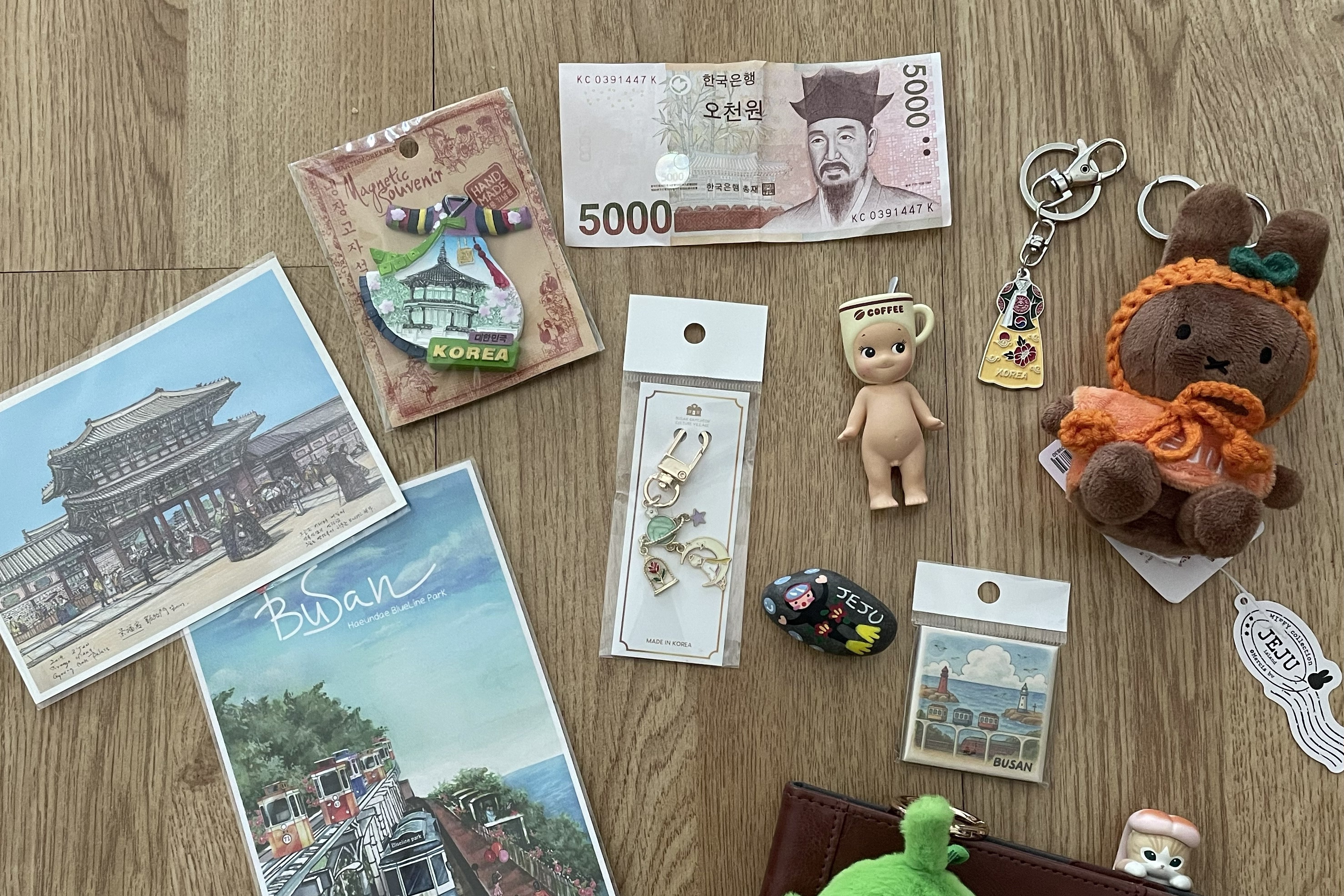
We bought the usual souvenirs along the way, including magnets, postcards, local snacks, a tote bag and a cap. Altogether, I estimate we spent around €120 on souvenirs.
I also couldn’t resist doing some skincare shopping at Olive Young, South Korea’s most famous beauty store. My final receipt came to €75.58, which honestly could have been much worse considering the temptation.
So, How Much Did Our South Korea Trip Cost?
After adding everything together, our total came to approximately €4,900 for two people.
This includes international flights, accommodation, transportation, activities, food, shopping and souvenirs. Per person, that works out to roughly €2,450 for a 13-day trip through South Korea.
Could you travel for less? Definitely. Staying in hostels, eating more local meals and relying entirely on public transport would lower your budget considerably. On the other hand, it’s also easy to spend more if you choose luxury hotels, shop extensively or dine at high-end restaurants.
Final Thoughts
Looking back, I think South Korea offers fantastic value for money. While flights can be expensive, many of the daily expenses once you’re actually in the country are surprisingly affordable. We stayed in comfortable accommodations, explored three completely different regions, rented a car in Jeju, ate out every day and never felt like we had to constantly watch our spending.
For two weeks in South Korea, spending around €2,450 per person felt very reasonable considering everything we experienced. From the busy streets of Seoul and the beaches of Busan to the volcanic landscapes of Jeju Island, I left feeling that South Korea was worth every euro.
If you’re currently planning your own trip and wondering whether South Korea is expensive, my honest answer would be no. It’s certainly not a budget destination by Southeast Asian standards, but compared to many Western countries, I found it surprisingly affordable and one of the best-value trips I’ve taken.
You can find all my other posts about South Korea here.


Leave a Reply