

Planning a trip to Ecuador can feel overwhelming because the country offers an incredible variety of landscapes in a relatively small area. This 2 week Ecuador itinerary is designed for first-time visitors who want to experience the Andes, Amazon rainforest, and coastal culture in one efficient and logical route. From the historic streets of Quito to the wildlife-rich Cuyabeno Wildlife Reserve and the adventure town of Baños, this itinerary shows you the best places to visit in Ecuador without rushing.
In 2019, I spent five months living in Quito while doing an internship at Rebecca Adventure Travel. During that time, I explored mountains, cloud forests, beaches, and the Amazon. Often traveling solo by bus and meeting incredible people along the way. This route is based on those experiences, shaped into a realistic plan for a two-week vacation.
Why Visit Ecuador?
Few countries offer such extreme diversity in such short travel distances. Within days, you can move from high-altitude Andean cities to humid cloud forests, from the Amazon basin to volcanic crater lakes. Ecuador is also one of the most accessible countries in South America for independent travel thanks to its extensive bus network and compact size.
Getting Around Ecuador
Getting around Ecuador is surprisingly easy, even without a car. I usually took an Uber in Quito to reach the bus terminal and continued all my trips by long-distance bus. The buses are comfortable, safe, and very affordable, with reclining seats and frequent departures between major destinations like Quito, Otavalo, Mindo, Baños, and Latacunga (for Quilotoa).

Quito Bus Terminals
- Terminal Terrestre Quitumbe – serves southern routes (Baños, Latacunga/Quilotoa, Cuenca).
- Terminal Carcelén – northern routes (Otavalo, Ibarra).
- Terminal Ofelia – western routes, including Mindo.
Some bus routes are frequent, while others run only a few times per day. For example, when we traveled to Baños, there wasn’t immediately a bus with available seats, so we had to wait a bit at the terminal. Tip: Check departure times online via company websites (Cooperativa Transportes, Transportes Baños, Transportes Otavalo) or at the terminal, and buy tickets early for popular routes.
Tips: Bring small bills for tickets, a jacket for air-conditioned buses, and allow extra time for mountain routes.
Days 1-3: Quito – Culture, altitude & Andean Views
Arriving in Quito means immediately feeling the altitude. At 2,850 meters above sea level, even walking uphill can leave you breathless. Give yourself time to acclimatize: drink plenty of water, eat light meals, and avoid intense activity on your first day.
Spend time wandering the historic center, one of the best preserved colonial districts in Latin America. Churches, plazas, and narrow streets reveal why Quito was among the first UNESCO World Heritage Sites. For panoramic views, take the TelefériQo up the slopes of Pichincha volcano. On clear days, snow-capped peaks surround the city, reminding you that the Andes define this landscape. However, I would not recommend doing this if you have just arrived. The altitude really is a thing here.
While the Old Town is stunning, neighborhoods like La Mariscal and La Floresta offer a more contemporary feel with cafés, street art, and international restaurants. La Floresta in particular has a creative atmosphere and is great for slow mornings in independent coffee shops.
A short trip north of the city brings you to the Middle of the World monument (Mitad del Mundo), where you can stand on the equator. While it’s touristy, it’s still a fun and educational stop, especially if it’s your first time in Ecuador.
Quito is also the perfect introduction to Ecuadorian cuisine. Try locro de papa (potato soup with cheese and avocado) or fresh fruit juices in local markets.


Day 4: Otavalo – Indigenous markets & Andean traditions
A two-hour bus ride north brings you to Otavalo, home to one of South America’s most famous indigenous markets. Plaza de los Ponchos fills with colorful textiles, handwoven blankets, jewelry, and leather goods made by local artisans. Beyond shopping, Otavalo offers insight into living Andean traditions. Many vendors wear traditional clothing, and nearby villages specialize in weaving and music. If time allows, visit Laguna Cuicocha for views of a volcanic crater lake. Returning to Quito in the evening keeps your route efficient and avoids unnecessary hotel changes.


Days 5-6: Mindo – Cloud Forest & Waterfall trails
After the high altitude of the Andes, Mindo feels like a warm, green breath of fresh air. This small cloud forest town is one of Ecuador’s biodiversity hotspots, known for birdwatching, butterflies, waterfalls, and adventure activities.
One of the highlights here is the Santuario de Cascadas (Waterfall Sanctuary), located in the Mindo-Nambillo Ecological Reserve. To reach it, you first cross the valley using a tarabita: a small cable car suspended high above the forest canopy. The ride alone is an adventure, offering panoramic views of the cloud forest stretching endlessly below. On the other side, several hiking trails lead to multiple waterfalls, each more impressive than the last. The paths wind through dense vegetation filled with orchids, moss, and birdsong. Some waterfalls require short detours or river crossings, making the experience feel like a true jungle exploration.
Besides the waterfall sanctuary, Mindo is perfect for a slower pace. Visit the Mariposario de Mindo, where hundreds of colorful butterflies flutter freely around you, or take a chocolate tour to learn how Ecuador’s famous cacao is transformed into artisanal chocolate. If you’re up for more adrenaline, Mindo is also known for ziplining, tubing, and birdwatching excursions.


Day 7: Papallacta – Hot springs in the Highlands
Travel back via Quito and continue east to Papallacta, a small mountain village known for its thermal hot springs. Surrounded by misty páramo landscapes, the Papallacta Spa is an ideal place to relax before heading into the Amazon. Soaking in hot mineral pools while cold mountain air drifts across the water feels both calming and surreal. Bring a swimsuit and arrive early if you prefer a quieter atmosphere.
Days 8-10: Cuyabeno – Immersion in the Amazon Rainforest
From the Andes, the journey continues into the Amazon basin to the Cuyabeno Wildlife Reserve. I stayed at Nicky Amazon Lodge, where multi-day tours immerse you in rainforest life. You can find my blog post about this here.
Days begin with the sounds of birds and insects echoing through the canopy. You travel by canoe along narrow waterways, spotting monkeys, sloths, and, if you’re lucky: pink river dolphins. Night walks reveal a completely different world: glowing insects, tree frogs, and distant nocturnal calls. A highlight is visiting local communities to learn about traditional ways of life and how people live in harmony with the rainforest. The experience is both humbling and unforgettable.

Days 11-12: Baños – Ecuador’s adventure capital
After the jungle, head to Baños, a lively town nestled between waterfalls and the active Tungurahua volcano. Baños is known as Ecuador’s adventure capital, and it’s easy to spend days here. I went here twice because there is SO much to do!
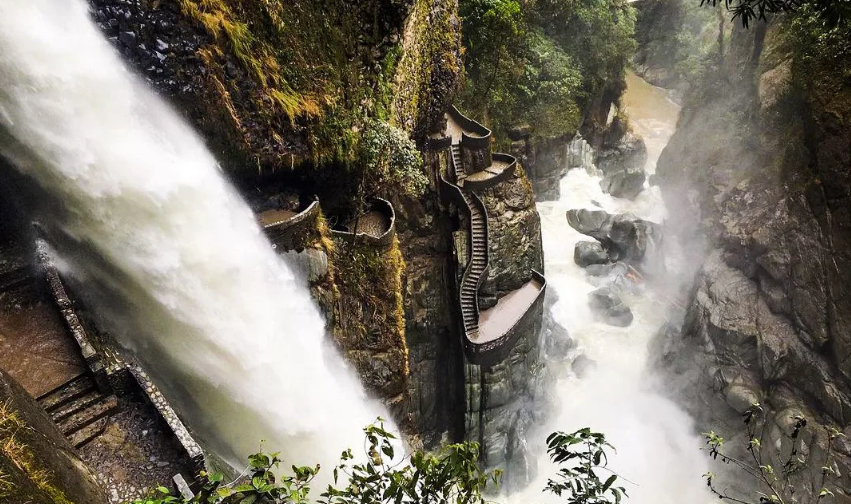
Cycling the Route of Waterfalls is one of the most popular activities. The ride passes multiple cascades and ends at the dramatic Pailón del Diablo, where water crashes through a narrow canyon and sprays visitors standing on viewing platforms. For more adrenaline, you can try canyoning down waterfalls, white-water rafting, quad biking through mountain trails, or paragliding over the valley. You don’t have to book this in advance, the town is filled with shops who offer these excursions. Afterward, unwind at Luna Volcán Adventure Spa, where thermal pools overlook the mountains: one of the most beautiful viewpoints in the region.


Day 13: Quilotoa – Hiking a Volcanic Crater Lake
The journey continues to Quilotoa, a turquoise crater lake formed by a collapsed volcano. The rim hike offers sweeping views of the caldera and surrounding Andean landscapes. Although the trail looks manageable, the altitude can make breathing difficult. I personally had to turn back halfway because I felt short of breath: a reminder to pace yourself and respect the elevation.
Day 14: Return to Quito
Return to Quito for your final night. After two weeks crossing cloud forests, jungle rivers, volcanic highlands, and indigenous villages, the city feels both familiar and different: a place to reflect on everything you’ve experienced.
Extend to 3 weeks in Ecuador: Coast & Southern Andes
If you have more time, Ecuador rewards you with even more diversity.
In Montañita, the rhythm slows. Days revolve around surfing, sunsets, and a relaxed beach culture, while nights bring lively bars and an international crowd. It’s a place where plans dissolve and you simply enjoy the moment.
Further north, Puerto López serves as the gateway to Isla de la Plata, often called a budget-friendly alternative to the Galápagos. Boat tours offer chances to see blue-footed boobies, sea turtles, and, in season, migrating whales.
To the south, Cuenca charms visitors with colonial architecture and cobblestone streets. Nearby Cajas National Park offers high-altitude hiking trails weaving between glacial lakes and dramatic páramo landscapes: a stark contrast to the Amazon you experienced earlier.

Is 2 weeks enough in Ecuador?
Two weeks in Ecuador offers an incredible introduction to one of South America’s most diverse countries. You’ll experience multiple ecosystems, climates, and cultures in a relatively short time. But if you can stay longer, do it. Even after five months, I felt I had only scratched the surface. Ecuador has a way of pulling you back, with its landscapes, its people, and the sense that around every mountain bend, there’s something new waiting to be discovered.


Leave a Reply